Cell Tower Technicians
Overview
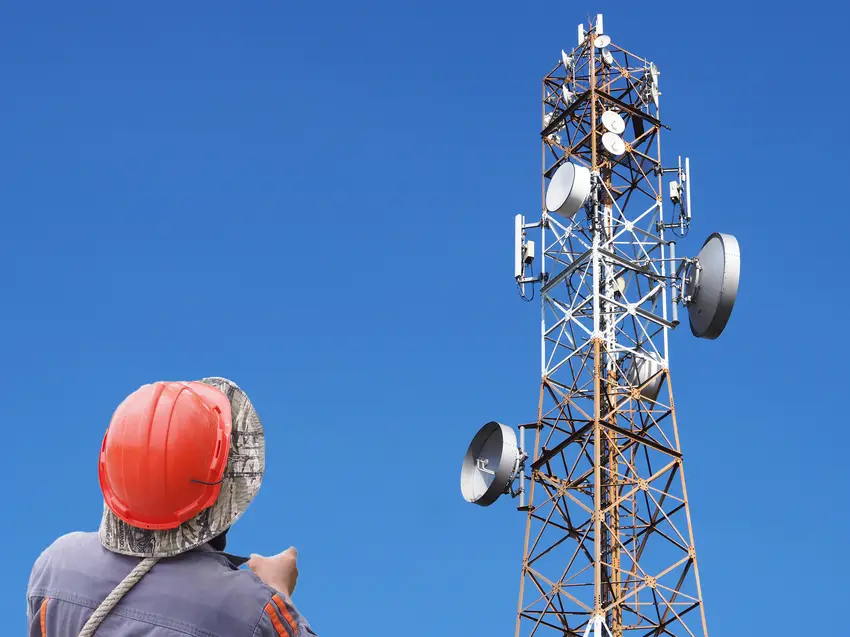
Cell tower technicians install and maintain the equipment that keeps your phone connected to the internet and cellular networks. They climb tall towers to install antennas, run cables, and test transmission equipment using specialized software and tools. These professionals read technical blueprints, position antennas for optimal coverage, and ensure all hardware is properly secured and weatherproofed. The job combines hands-on technical work with problem-solving skills, and many technicians work in teams while traveling to different tower sites.
Did you know?
Obtaining relevant certifications such as CompTIA Network+, fiber optic certifications, or manufacturer-specific training is essential for career advancement and meeting employer requirements in the competitive US telecommunications market.
At a Glance
$68,140 Avg/yr
Median Wage
Fast Growing
Growth
Learning Strategies
Top Skill
Key Responsibilities
- Test batteries, using hydrometers and ammeters, and charge batteries as necessary.
- Check antenna positioning to ensure specified azimuths or mechanical tilts and adjust as necessary.
- Test equipment functions such as signal strength and quality, transmission capacity, interference, and signal delay, using equipment such as oscilloscopes, circuit analyzers, frequency meters, and wattmeters.
- Transport equipment to work sites, using utility trucks and equipment trailers.
- Perform maintenance or repair work on existing tower equipment, using hand or power tools.
- Run appropriate power, ground, or coaxial cables.
- Lift equipment into position, using cranes and rigging tools or equipment, such as gin poles.
- Bolt equipment into place, using hand or power tools.
- Test emergency transmitters to ensure their readiness for immediate use.
- Insert plugs into receptacles and bolt or screw leads to terminals to connect equipment to power sources, using hand tools.
- Monitor radio range stations to detect transmission flaws and adjust controls to eliminate flaws.
- Install, adjust, and repair stationary and mobile radio transmitting and receiving equipment and two-way radio communication systems.
- Locate tower sites where work is to be performed, using mapping software.
- Test operation of tower transmission components, using sweep testing tools or software.
- Install, connect, or test underground or aboveground grounding systems.
- Climb towers to access components, using safety equipment, such as full-body harnesses.
- Calibrate and align components, using scales, gauges, and other measuring instruments.
- Remove and replace defective components and parts such as conductors, resistors, semiconductors, and integrated circuits, using soldering irons, wire cutters, and hand tools.
- Complete reports related to project status, progress, or other work details, using computer software.
- Inspect completed work to ensure all hardware is tight, antennas are level, hangers are properly fastened, proper support is in place, or adequate weather proofing has been installed.
- Install or repair tower lighting components, including strobes, beacons, or lighting controllers.
- Repair circuits, wiring, and soldering, using soldering irons and hand tools to install parts and adjust connections.
- Install all necessary transmission equipment components, including antennas or antenna mounts, surge arrestors, transmission lines, connectors, or tower-mounted amplifiers (TMAs).
- Take site survey photos or photos of work performed, using digital cameras.
- Replace existing antennas with new antennas as directed.
- Mount equipment on transmission towers and in vehicles such as ships or ambulances.
- Climb communication towers to install, replace, or repair antennas or auxiliary equipment used to transmit and receive radio waves.
- Read work orders, blueprints, plans, datasheets or site drawings to determine work to be done.
- Examine malfunctioning radio equipment to locate defects such as loose connections, broken wires, or burned-out components, using schematic diagrams and test equipment.
- Turn setscrews to adjust receivers for maximum sensitivity and transmitters for maximum output.
Career Considerations
Industry Certifications and Training
Obtaining relevant certifications such as CompTIA Network+, fiber optic certifications, or manufacturer-specific training is essential for career advancement and meeting employer requirements in the competitive US telecommunications market.
Physical Demands and Safety Requirements
The role involves significant physical work including climbing poles, working in confined spaces, and handling heavy equipment, requiring adherence to strict OSHA safety standards and maintaining physical fitness.
Evolving Technology Landscape
Staying current with rapidly advancing technologies like 5G networks, fiber optic systems, and IoT infrastructure is crucial as the US telecommunications industry undergoes major modernization efforts.