Food Processing Equipment Operators
Overview
Food processing equipment operators run specialized machines that roast, bake, and dry various food products like coffee beans, nuts, grains, and bakery items. You'll monitor equipment controls, check product quality by observing, tasting, and testing samples, and adjust temperature and timing settings to ensure everything meets safety standards. This job combines hands-on technical skills with attention to detail, as you'll record production data and work with advanced processing equipment. Many operators work in modern facilities where teamwork and following precise procedures are essential for producing the foods we enjoy every day.
Did you know?
Food production operators must meet strict OSHA safety standards while performing physically demanding tasks like standing for long periods, lifting heavy materials, and working in temperature-controlled environments.
At a Glance
$43,178.60 Avg/yr
Median Wage
Stable
Growth
Coordination
Top Skill
Key Responsibilities
- Install equipment, such as spray units, cutting blades, or screens, using hand tools.
- Signal coworkers to synchronize flow of materials.
- Weigh or measure products, using scale hoppers or scale conveyors.
- Clean equipment with steam, hot water, and hoses.
- Test products for moisture content, using moisture meters.
- Clear or dislodge blockages in bins, screens, or other equipment, using poles, brushes, or mallets.
- Observe, feel, taste, or otherwise examine products during and after processing to ensure conformance to standards.
- Observe temperature, humidity, pressure gauges, and product samples and adjust controls, such as thermostats and valves, to maintain prescribed operating conditions for specific stages.
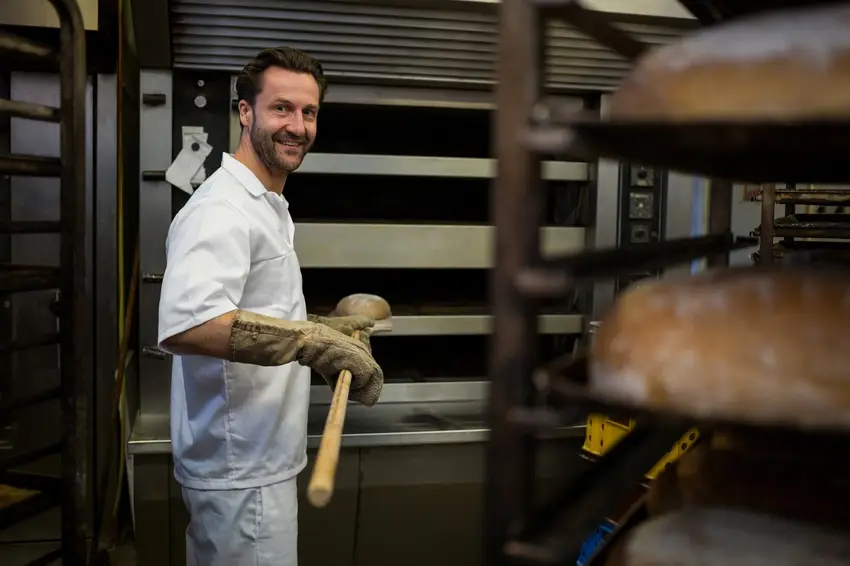
- Operate or tend equipment that roasts, bakes, dries, or cures food items such as cocoa and coffee beans, grains, nuts, and bakery products.
- Open valves, gates, or chutes or use shovels to load or remove products from ovens or other equipment.
- Take product samples during or after processing for laboratory analyses.
- Read work orders to determine quantities and types of products to be baked, dried, or roasted.
- Set temperature and time controls, light ovens, burners, driers, or roasters, and start equipment, such as conveyors, cylinders, blowers, driers, or pumps.
- Push racks or carts to transfer products to storage, cooling stations, or the next stage of processing.
- Record production data, such as weight and amount of product processed, type of product, and time and temperature of processing.
- Observe flow of materials and listen for machine malfunctions, such as jamming or spillage, and notify supervisors if corrective actions fail.
- Fill or remove product from trays, carts, hoppers, or equipment, using scoops, peels, or shovels, or by hand.
- Smooth out products in bins, pans, trays, or conveyors, using rakes or shovels.
- Start conveyors to move roasted grain to cooling pans and agitate grain with rakes as blowers force air through perforated bottoms of pans.
Career Considerations
Physical Demands and Safety Requirements
Food production operators must meet strict OSHA safety standards while performing physically demanding tasks like standing for long periods, lifting heavy materials, and working in temperature-controlled environments.
Career Advancement Opportunities
The role offers pathways to supervisory positions, quality assurance roles, or specialized technical positions within the growing American food manufacturing sector.
Industry Automation and Job Security
While the food industry remains stable, workers should develop technical skills to adapt to increasing automation and maintain competitiveness in the evolving American manufacturing landscape.