Surgical Assistants
Overview
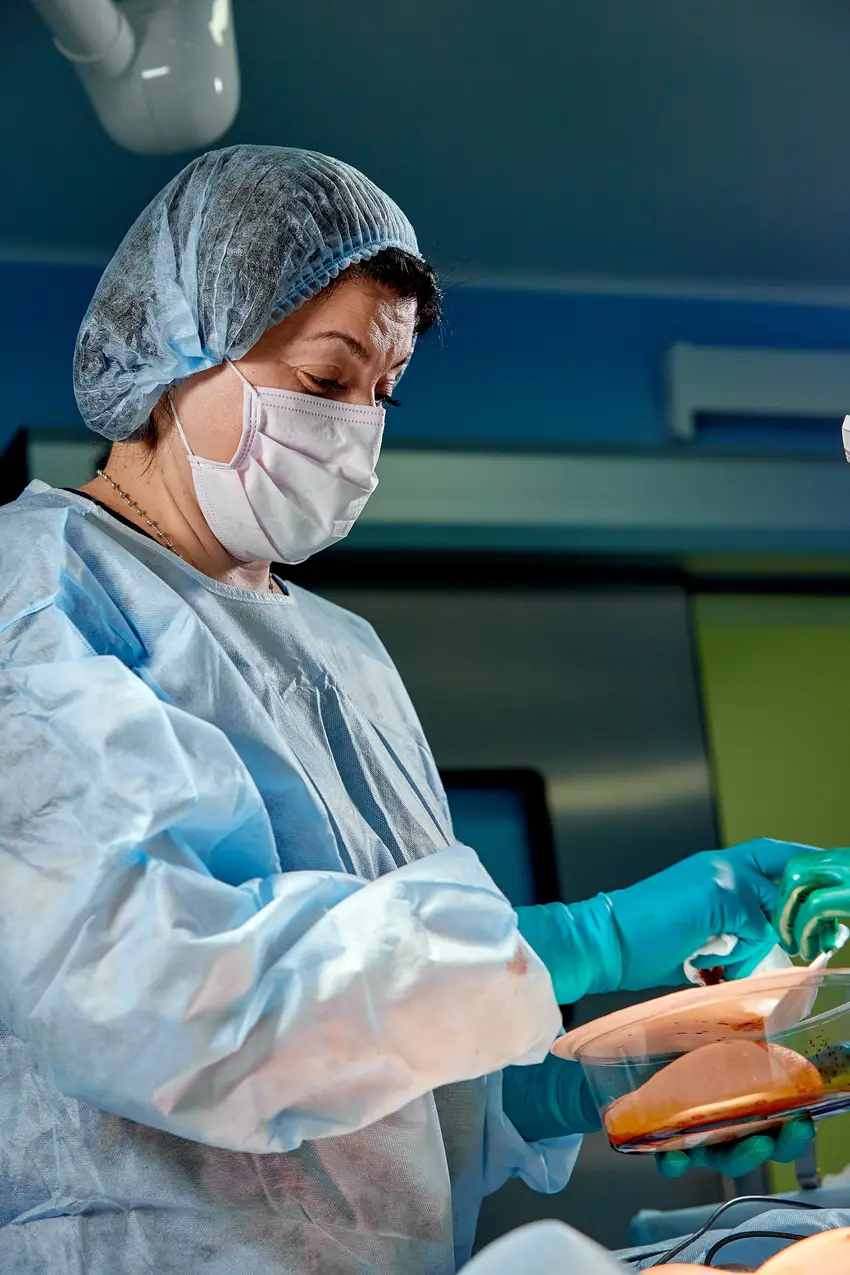
Surgical assistants work as essential team members in operating rooms, helping surgeons perform life-saving procedures. They prepare sterile surgical environments, organize advanced medical equipment, and assist during operations by passing instruments and ensuring patient safety. This role requires precise technical skills, attention to detail, and the ability to work under pressure in fast-paced healthcare settings. Most surgical assistants complete specialized certification programs that combine hands-on training with medical technology and sterile technique knowledge.
Did you know?
Surgical assistants in the US typically need completion of an accredited program and certification through organizations like NBSTSA to meet state and employer requirements.
At a Glance
$62,301.56 Avg/yr
Median Wage
Fast Growing
Growth
Management of Personnel Resources
Top Skill
Key Responsibilities
- Assist with patient resuscitation during cardiac arrest or other life-threatening events.
- Transport patients to operating room.
- Prepare and apply sterile wound dressings.
- Maintain an unobstructed operative field, using surgical retractors, sponges, or suctioning and irrigating equipment.
- Assess skin integrity or other body conditions upon completion of the procedure to determine if damage has occurred from body positioning.
- Assist in volume replacement or autotransfusion techniques.
- Adjust and maintain operating room temperature, humidity, or lighting, according to surgeon's specifications.
- Monitor and maintain aseptic technique throughout procedures.
- Remove patient hair or disinfect incision sites to prepare patient for surgery.
- Postoperatively inject a subcutaneous local anesthetic agent to reduce pain.
- Coordinate with anesthesia personnel to maintain patient temperature.
- Monitor patient intra-operative status, including patient position, vital signs, or volume and color of blood.
- Obtain or inspect sterile or non-sterile surgical equipment, instruments, or supplies.
- Assist members of surgical team with gowning or gloving.
- Operate sterilizing devices.
- Assist in the insertion, positioning, or suturing of closed-wound drainage systems.
- Apply sutures, staples, clips, or other materials to close skin, facia, or subcutaneous wound layers.
- Incise tissue layers in lower extremities to harvest veins.
- Clamp, ligate, or cauterize blood vessels to control bleeding during surgical entry, using hemostatic clamps, suture ligatures, or electrocautery equipment.
- Insert or remove urinary bladder catheters.
- Coordinate or participate in the positioning of patients, using body stabilizing equipment or protective padding to provide appropriate exposure for the procedure or to protect against nerve damage or circulation impairment.
- Pass instruments or supplies to surgeon during procedure.
- Gather, arrange, or assemble instruments or supplies.
- Assist in applying casts, splints, braces, or similar devices.
- Discuss with surgeon the nature of the surgical procedure, including operative consent, methods of operative exposure, diagnostic or laboratory data, or patient-advanced directives or other needs.
- Verify the identity of patient or operative site.
- Cover patients with surgical drapes to create and maintain a sterile operative field.
- Determine availability of necessary equipment or supplies for operative procedures.
Career Considerations
Certification Requirements
Surgical assistants in the US typically need completion of an accredited program and certification through organizations like NBSTSA to meet state and employer requirements.
Physical and Emotional Demands
The role requires standing for extended periods during lengthy surgeries and managing high-stress situations in critical medical environments.
Career Growth Potential
The healthcare sector offers strong job security and advancement opportunities, including specialization in specific surgical areas or progression to supervisory positions.